

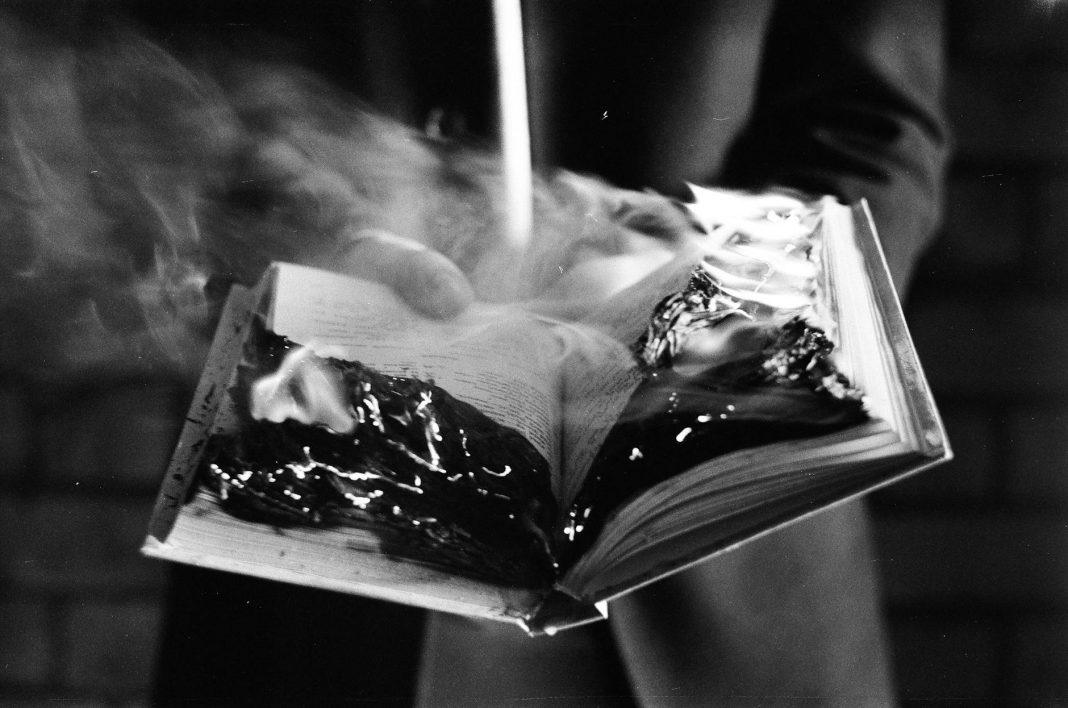

The Book That Was Too Dangerous to Be Printed
History is littered with stories of banned books, texts deemed too incendiary, too rebellious, or too revealing for public consumption. Yet, some tales go beyond mere censorship. They speak of books so extraordinarily dangerous, so potentially disruptive, that the very act of their creation and attempted publication threatened to unleash forces far beyond the control of their authors or their would-be publishers. These are not just stories of ideas that challenged the status quo; they are tales of powerful entities, secret societies, and the terrifying possibility that certain knowledge, once unleashed, could irrevocably alter the fabric of human civilization. One such legend, whispered in hushed tones across centuries, is that of the book too dangerous to be printed.
While the exact specifications and origins of such a mythical text remain shrouded in speculation and folklore, the concept itself speaks volumes about our enduring fascination with forbidden knowledge and the power that information can hold. What kind of book could inspire such fear? What secrets could it contain that warranted extreme measures to suppress it?
The Anatomy of a Dangerous Book: What Makes Knowledge Treasonous?
The label “dangerous” applied to a book is rarely a simple one. It’s a complex interplay of content, context, and consequence. Throughout history, books have been deemed dangerous for a multitude of reasons:
- Religious Heresy: Texts that challenged established religious doctrine or presented alternative spiritual interpretations have frequently been suppressed. Think of early scientific works that seemed to contradict biblical accounts or mystical texts that claimed direct access to the divine outside of sanctioned channels.
- Political Subversion: Any writing that advocated for revolution, questioned the legitimacy of rulers, or exposed corruption within the government was a prime target for censorship. The printing press, in its early days, was a monumental equalizer, allowing dissenting voices to reach wider audiences than ever before.
- Scientific and Philosophical Revelations: Discoveries that overturned long-held beliefs about the universe, the human body, or the nature of reality could be seen as destabilizing. Copernicus’s heliocentric model, for instance, challenged the Earth’s central place in the cosmos, a notion deeply intertwined with religious and philosophical thought.
- Esoteric and Occult Knowledge: Books detailing rituals, spells, secret histories, or forbidden magical practices have always held a certain allure and a corresponding fear. The idea that such knowledge, if in the wrong hands, could wreak havoc is a persistent theme.
- Social and Moral Corruption: Works that explored taboo subjects like sexuality, presented challenging moral dilemmas, or depicted lifestyles deemed decadent or immoral could be censored in an attempt to maintain societal order.
The “book too dangerous to be printed” elevates these concerns to an almost apocalyptic level. It suggests a manuscript capable of not just influencing individuals or small groups, but of triggering widespread societal collapse, plunging humanity into chaos, or even fundamentally altering the nature of reality.
Legends of the Forbidden Tome: Mythological Precursors and Historical Echoes
While the specific “book” might be apocryphal, the concept draws from a rich tapestry of historical anxieties and mythological narratives.
The Necronomicon: A Fictional Foundation
Perhaps the most famous example of a book too dangerous to exist is H.P. Lovecraft’s fictional Necronomicon, or “Book of the Dead.” This grimoire, conjured by Lovecraft in his Cthulhu Mythos, is described as containing forbidden knowledge of elder gods, cosmic horrors, and rituals capable of summoning unspeakable beings. Its mere perusal is said to drive readers to madness, and its existence is a threat to the sanity of mankind. While fictional, the Necronomicon has deeply influenced the popular imagination, becoming a shorthand for utterly forbidden and dangerous lore. The fear it embodies is very real for its fictional readers.
The Emerald Tablet of Hermes Trismegistus
Moving into historical (albeit legendary) territory, the Emerald Tablet is a cryptic text attributed to Hermes Trismegistus, a syncretic deity embodying Greek Hermes and Egyptian Thoth. It is considered one of the foundational texts of alchemy. Its cryptic pronouncements, particularly “As above, so below,” have been interpreted in countless ways, influencing Western esotericism for centuries. While not overtly “dangerous” in the catastrophic sense, its profound philosophical and alchemical implications made it a source of intense study and secrecy, and its misinterpretation or misuse could certainly be seen as dangerous by those in power.
The Voynich Manuscript: A Modern Enigma
The Voynich Manuscript is a mysterious, illustrated codex written in an unknown script and language. Its contents are entirely undecipherable, and despite intense scrutiny from cryptographers and historians, its purpose, origin, and meaning remain elusive. The very mystery surrounding the Voynich Manuscript lends it an aura of the forbidden. What secrets does it hold that have eluded humanity for centuries? Could it contain lost scientific knowledge, forgotten history, or something far stranger? The inability to understand it fuels speculation about its potential “danger.” If it contained profound truths, their suppression for so long would be a significant omission.
The Protocols of the Elders of Zion: A Dangerous Lie
A chillingly real example of a text with devastating consequences, though not due to its inherent content but its malicious intent and reception, is The Protocols of the Elders of Zion. This antisemitic forgery, first published in Russia in 1903, purports to be a secret plan by Jewish leaders to achieve global domination. Despite being definitively proven as a fabrication, the Protocols have been widely disseminated and have fueled hatred and violence against Jewish people for over a century, leading to tragic real-world consequences. Its “danger” lies in its deliberate falsehood and its power to incite prejudice and persecution.
The Pursuit of the Unprintable: Examples and Allegations
Beyond these well-known examples, numerous rumors and alleged instances exist of books that were so potent, so threatening, that their authors and publishers were forced into extreme measures to keep them from the public.
The Alchemical Texts of the Renaissance
During the Renaissance, alchemy was a potent mix of early chemistry, philosophy, and mysticism. Alchemists sought not only to transmute base metals into gold but also to discover the Elixir of Life and the Philosopher’s Stone. This pursuit often involved dangerous experimentation and drew the attention of both religious and secular authorities. Many alchemical texts were written in allegory and code to protect their secrets from those who would misuse them or persecute their practitioners. It is entirely plausible that some alchemists, upon achieving what they believed to be true breakthroughs, wrote treatises that were considered too potent for wider circulation, fearing state intervention, church condemnation, or the chaos that widespread knowledge of transmutation or immortality might bring.
The Secret Teachings of the Rosicrucians
The Rosicrucian movement, a mystical and esoteric order that emerged in Europe in the early 17th century, was shrouded in secrecy. Their manifestos, published anonymously, hinted at profound spiritual and philosophical knowledge, claiming to possess secrets of a universal reformation. The intense speculation and fear surrounding their alleged doctrines led to accusations of sorcery and blasphemy. It is conceivable that within their inner circles, more complete and detailed texts existed that were deemed too powerful, too radical, or too revealing of their spiritual path to be shared with the uninitiated, lest their society be dismantled or their teachings distorted.
The Suppressed Works of Scientific Heretics
Throughout scientific history, individuals who challenged prevailing paradigms often faced ostracism and censorship. Think of Ignaz Semmelweis, whose advocacy for handwashing in medical settings before it was widely accepted led to ridicule and professional ruin. While Semmelweis wrote extensively, one can imagine a hypothetical scenario where a scientist made a discovery so paradigm-shattering that official channels refused to publish it, driving the scientist to produce a manuscript that was then actively suppressed by powerful institutions fearing its implications. This could apply to early theories that defied religious dogma or had radical social consequences.
The Whispers of Underground Presses
In times of intense political or religious oppression, clandestine printing operations emerged to disseminate forbidden texts. These underground presses were inherently dangerous, and the works they produced were often highly subversive. It is not difficult to imagine that among the pamphlets and banned books circulated by these networks, there might have been manuscripts that even their revolutionary founders deemed too incendiary for widespread distribution, perhaps due to their advocacy of extreme violence, their exposure of highly sensitive intelligence, or their promotion of ideas so alien they were believed to be inherently destabilizing.
The Mechanics of Suppression: How a Book Becomes Too Dangerous
The decision to suppress a book is rarely a unilateral act. It involves a complex network of individuals, institutions, and societal pressures.
The Role of Authority: State and Church
- Governments: Historically, governments have been the primary enforcers of censorship. Laws against sedition, heresy, and blasphemy provided the legal framework for banning books. The fear of rebellion, espionage, or the undermining of state authority drove these actions.
- Religious Institutions: Churches and religious bodies have also wielded immense power in suppressing texts deemed heretical or immoral. The Inquisition, for example, maintained extensive indexes of forbidden books. The fear was of spiritual corruption and the erosion of faith.
The Power of Public Opinion and Social Pressure
Beyond official channels, public outcry and social pressure could also lead to a book’s suppression. Mob action, boycotts, and organized campaigns could make it impossible for publishers to distribute a text or for authors to find an audience. This is particularly true for books that challenged deeply entrenched social norms or moral values.
The Conspiracy of Silence: Self-Censorship and Destruction
Perhaps the most extreme form of suppression occurs when the creators themselves, or those close to them, decide a work is too dangerous. This could involve:
- Deliberate Secrecy: Authors writing in code, using allegories, or only sharing their work with a trusted few.
- Intentional Destruction: Upon realizing the potential ramifications of their work, an author might destroy their manuscript to prevent it from falling into the wrong hands.
- The “Lost” Manuscript: Stories often emerge of valuable or dangerous manuscripts that were lost to time, fire, or deliberate destruction, leaving only tantalizing rumors behind.
The Perils of Unchecked Knowledge: A Philosophical Quandary
The very idea of a book being “too dangerous” raises profound philosophical questions. Is there any knowledge that should be inherently forbidden? Who gets to decide what constitutes “dangerous” knowledge? And what are the potential consequences of not knowing?
The suppression of potentially revolutionary scientific or philosophical ideas can stifle human progress. The free exchange of ideas, even those that challenge us, is often seen as essential for a healthy, evolving society. However, the fear that certain knowledge could lead to widespread destruction or the unraveling of civilization is also a valid concern. It presents a timeless dilemma: the pursuit of truth versus the preservation of order.
The Modern Echo: Digital Age and the New Frontiers of Forbidden Knowledge
In the digital age, the concept of a “book too dangerous to be printed” takes on new dimensions. Information can spread globally in an instant, making traditional censorship methods far less effective. Yet, new forms of control and suppression emerge.
- Information Warfare and Disinformation: Malicious actors can disseminate fabricated texts and propaganda, wielding information as a weapon of mass deception.
- Algorithmic Control: The algorithms that govern our online experiences can create echo chambers and filter information, effectively “suppressing” certain viewpoints without overt censorship.
- The Dark Web: For truly forbidden information, the dark web offers a space where it can be shared, albeit with significant risks and accessibility barriers.
The question of what constitutes “dangerous knowledge” in the 21st century remains as complex as ever. Is it instructions for creating weapons of mass destruction? Advanced AI code? Deep psychological manipulation techniques? Or perhaps insights into the fundamental nature of reality that could shatter our anthropocentric worldview?
Conclusion: The Enduring Allure of the Forbidden
The legend of the book too dangerous to be printed is more than just a spooky tale. It is a potent metaphor for humanity’s complex relationship with knowledge itself. It speaks to our innate curiosity, our desire to uncover hidden truths, but also to our deep-seated fears of the unknown and the potential for knowledge to be misused.
Whether such a book has ever truly existed in the literal sense, or if it remains firmly in the realm of myth and legend, its concept continues to resonate. It reminds us that information is power, and that the control and dissemination of that power have always been central to human history and societal structures. The allure of the forbidden book will likely persist, a constant reminder of the fine line between enlightenment and oblivion, and the profound responsibility that comes with the pursuit and possession of knowledge.