

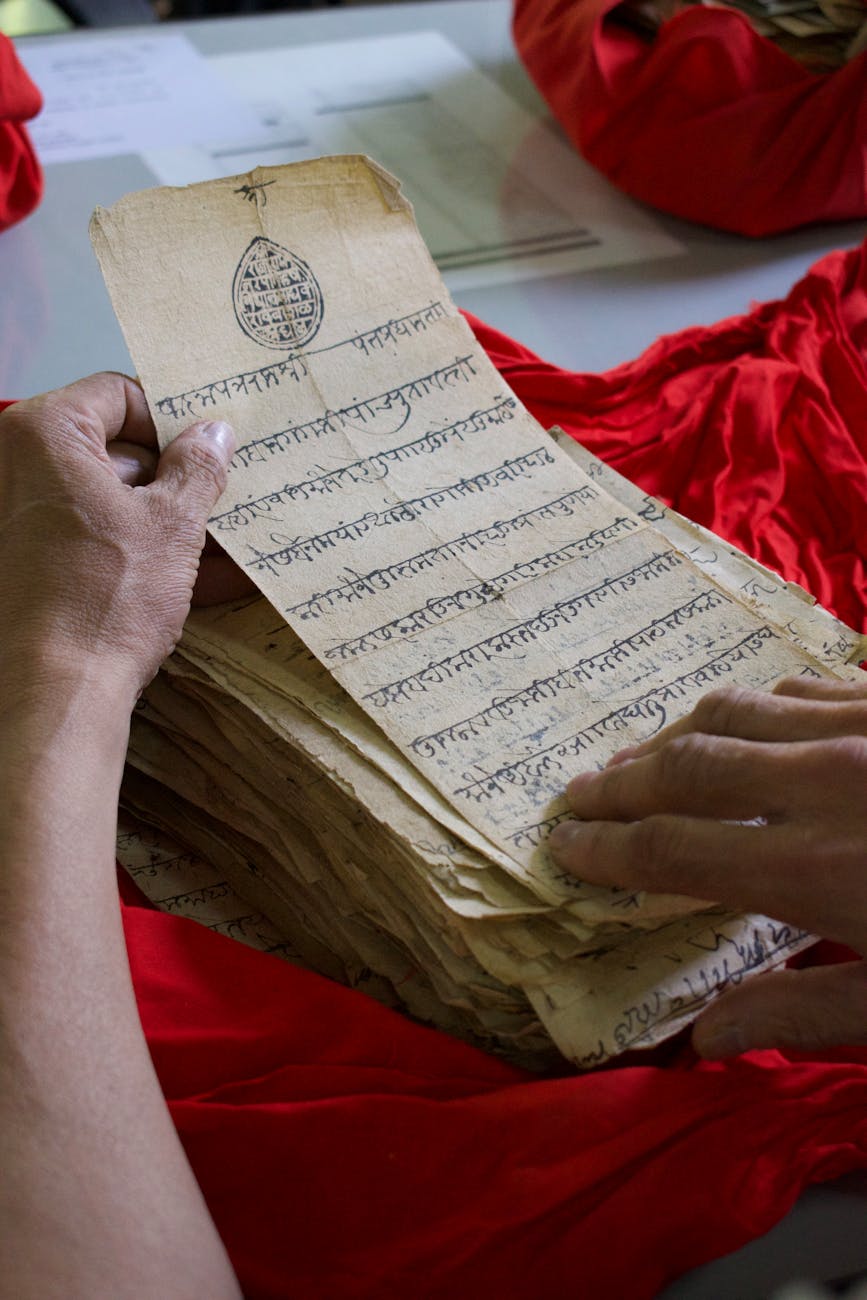

The Manuscript That Took 40 Years to Write: A Journey of Obsession, Dedication, and the Human Spirit
Some books are born of inspiration striking like lightning. Others, painstakingly crafted over years, decades even, are the result of a different kind of force: an unwavering, almost obsessive dedication to a singular vision. These are the manuscripts that don’t just get written; they are lived. They are the mountains climbed, the oceans traversed, the personal sagas etched onto paper. Today, we delve into the extraordinary story of a manuscript that took an astonishing 40 years to bring to fruition, exploring the forces that drove its creation and the lessons it holds for us all.
The Genesis of a Lifelong Project
Every epic journey begins with a single step, and for our hypothetical, yet archetypal, author – let’s call him Elias Thorne – the genesis of his magnum opus, a sprawling historical novel titled “The Whispering Sands of Aethelgard,” began not with a plot outline, but with a flicker of fascination. Elias, a young history enthusiast in his early twenties, stumbled upon a dusty, obscure academic treatise detailing a lesser-known medieval trade route. Something about the scarcity of information, the tantalizing hints of forgotten lives and bustling marketplaces, ignited a spark.
This wasn’t a fleeting interest. It was a seed that, once planted, would grow to define a significant portion of his adult life. Elias wasn’t just interested in the facts; he was captivated by the potential for storytelling within those historical bones. He envisioned the merchants with their weary faces, the vibrant colors of exotic spices, the hushed conversations in smoky taverns, the political machinations behind closed doors. He saw a world waiting to be reanimated.
The early years were characterized by a feverish, almost amateurish, zeal. Elias devoured every piece of available scholarship – books, obscure journals, digitized archival documents. He traced the historical route on antique maps, imagining the terrain, the climate, the dangers faced by those who traveled it. He filled notebooks with character sketches, snippets of imagined dialogue, and detailed descriptions of clothing, food, and dwellings. It was a period of pure, unadulterated exploration, a joyous plunge into the depths of his chosen historical period.
The Unfolding Years: Challenges, Setbacks, and Shifting Horizons
Forty years is a considerable span of time, and it’s naive to imagine the writing process as a linear progression. Elias’s journey was undoubtedly punctuated by periods of immense productivity interspersed with frustrating plateaus and outright creative deserts.
Life Intervenes: The Mundane and the Monumental
The most significant obstacle, as with most authors embarking on lengthy projects, was life itself. Elias, like anyone else, had to earn a living. He pursued a career, perhaps as a teacher, a librarian, or an archivist – a profession that, while not directly lucrative, kept him immersed in worlds of knowledge and research. This career provided financial stability but also demanded significant time and energy, leaving only pockets of opportunity for his true passion.
Beyond work, there were family responsibilities. Marriage, raising children, caring for aging parents – these are the essential, beautiful, and deeply time-consuming elements of a full life. Often, the hours Elias could dedicate to “The Whispering Sands of Aethelgard” were late at night or early in the morning, stolen moments before the demands of the day truly began.
There were also personal losses and triumphs. Illnesses, both his own and those of loved ones, could halt progress for months. Conversely, periods of newfound peace or happiness might fuel a surge of creative energy, leading to prolific writing spells. Each life event, big or small, wove itself into the fabric of Elias’s existence and, by extension, into the evolving narrative of his novel.
The Shifting Sands of Research and Understanding
The nature of research itself presents a unique challenge for projects of such duration. When Elias began, the internet was in its infancy, and access to primary sources was significantly more limited. He relied on physical libraries, interlibrary loans, and the occasional academic conference. However, over four decades, the landscape of historical research transformed dramatically.
New discoveries were made. Scholars unearthed previously unknown documents. Existing interpretations of events were challenged and revised. For Elias, this meant a constant process of re-evaluation. A character he had meticulously researched based on outdated information might need to be fundamentally altered, or a key plot point might require significant restructuring in light of new evidence. This wasn’t a setback, but a deepening of his understanding. It meant his novel was not just a product of his initial imagination but a living testament to the evolving nature of historical knowledge.
The Internal Struggle: Doubt, Frustration, and Perseverance
Perhaps the most relentless adversary was Elias’s own inner critic. The sheer scale of the project, the years ticking by without tangible publication, must have been a constant source of doubt.
- The “Is it good enough?” question: With each passing year, Elias’s own literary standards would undoubtedly rise. He would read contemporary novels, marvel at their polished prose and compelling narratives, and wonder if his own work could ever reach such a level.
- The fear of repetition: How many times could he realistically revisit a particular scene or character detail without it becoming stale or predictable?
- The isolation of the endeavor: Writing a novel that takes decades is an inherently solitary pursuit. Without the immediate feedback of an editor or critique group, maintaining motivation and a clear sense of direction could be incredibly difficult.
This is where perseverance, a quality akin to grit and sheer stubbornness, becomes paramount. Elias must have possessed an extraordinary capacity to push through these internal roadblocks, to silence the nagging voice of doubt and simply put words on the page, even when it felt like an unwinnable battle.
From Fragmented Notes to a Coherent Narrative
The structure of a novel conceived and written over 40 years is unlikely to be monolithic. It’s more probable that Elias worked in fits and starts, developing different sections at different times.
The Patchwork Quilt Approach
Imagine Elias, in his twenties, meticulously detailing the bustling marketplace of a medieval city. Later, in his forties, he might focus on the political intrigues of the royal court, the character arcs of his protagonists requiring significant growth and change over time. Then, in his sixties, as his understanding of the historical period deepened, he might revisit earlier sections, refining the language, enriching the descriptions, and ensuring consistency.
This “patchwork quilt” approach, while challenging to manage, also offers unique advantages. Each section benefits from the author’s accumulated wisdom and experience, leading to a layered and nuanced narrative. Characters might have subtle evolutions that reflect the author’s own life journey.
The Role of Technology: A Double-Edged Sword
The advent of personal computers and word processing software would have been a game-changer for Elias. While his initial drafts might have been handwritten or typed on a clunky typewriter, the ability to edit, revise, and reorganize digitally would have saved immense time and effort.
However, this technological shift also presented its own set of challenges. Imagine transferring decades of handwritten notes and early drafts into a digital format. The sheer volume of work would have been daunting. Furthermore, the ease of digital editing might have tempted him to endlessly tinker, further prolonging the process.
The Unifying Thread: Why This Novel?
What drove Elias Thorne to dedicate 40 years of his life to “The Whispering Sands of Aethelgard”? While the initial spark was historical fascination, the sustained dedication likely stemmed from a deeper, more profound connection.
A Quest for Meaning and Connection
Perhaps Elias saw in the historical period a reflection of timeless human struggles – the pursuit of wealth, the clash of ideologies, the enduring power of love and loss, the search for belonging in a chaotic world. The novel became his vehicle for exploring these universal themes, finding resonance between the past and the present.
The Characters as Companions
Over 40 years, Elias’s characters would have become more than just figments of his imagination. They would have been his companions, his confidantes, his family of sorts. He would have known their hopes, their fears, their secret desires intimately. Their journeys would have become as personal to him as his own.