

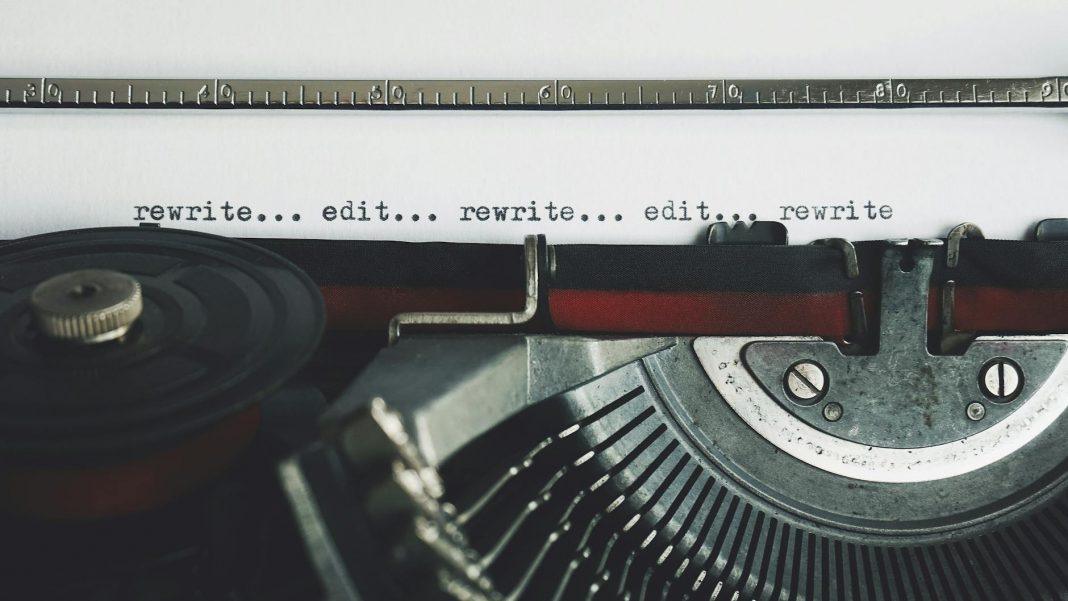

This Rewrite Was Better Than the Original Draft
It’s a confession that might make seasoned wordsmiths squirm. The title may even feel like a heresy in some creative circles. But the truth is, for many of us who spend our days wrestling with words, the second attempt, the third, or even the tenth, often triumphs over the initial spark. This isn’t a sign of failure on the first go; it’s a testament to the power and necessity of the rewrite.
Think of it like sculpting. The first draft is the raw block of marble. It has potential, a nascent form, but it’s rough, unrefined, and full of imperfections. The sculptor, armed with their tools and vision, then begins the meticulous process of chipping away, shaping, and polishing. The final masterpiece rarely resembles the initial, untouched stone in any direct, obvious way. Similarly, a writer’s first draft is just the beginning of a journey.
In this sprawling exploration, we’ll delve into the art and science of rewriting, examining why it’s not just beneficial, but often essential for creating truly impactful content. We’ll explore the psychological hurdles, the practical strategies, and the transformative power that comes with embracing the rewrite over clinging to the original draft.
The Elusive First Draft: A Necessary Evil?
Every writer has their own ritual for tackling that first draft. For some, it’s a frantic, uninhibited outpouring of ideas, a “get it all down” mentality. For others, it’s a more deliberate, structured approach, but still with the understanding that perfection is not the immediate goal.
The “Discovery Draft”
Many writers refer to the first draft as a “discovery draft.” This is where you explore your ideas, map out your narrative, and stumble upon unexpected insights. It’s a sandbox for your thoughts, a place where you can be messy, experimental, and even a little chaotic.
Why the first draft is so important (even if it’s not perfect):
- Getting Ideas Onto the Page: The biggest obstacle for many is simply starting. The first draft bypasses this hurdle by forcing words onto the screen or paper.
- Establishing Momentum: Once you’ve started, it’s easier to keep going. The momentum of writing, even if it’s mediocre, builds towards a complete thought or story.
- Revealing the Structure: As you write, you begin to see the natural flow of your ideas. What needs to come first? What details are essential? What can be cut?
- Uncovering the Core Message: Often, the true heart of your piece emerges during the initial writing process. You might start with one intention and discover a deeper, more compelling angle as you go.
However, it’s precisely because it’s a discovery draft that it rarely holds up on its own. It’s a snapshot of your thinking at that moment, not a polished final product.
Common Pitfalls of a First Draft
If the first draft is where the magic begins, it’s also where many dragons lurk. Understanding these common pitfalls helps us appreciate why rewriting is so crucial.
- Wordiness and Repetition: In the rush to articulate an idea, we often use more words than necessary. Sentences might be clunky, and points might be reiterated without adding new value.
- Lack of Clarity and Cohesion: Ideas might jump around, transitions might be abrupt, and the overall message can be muddled. The writer knows what they mean, but the reader struggles to follow.
- Weak Arguments or Inconsistent Narratives: The logical flow of an argument might be flawed, or plot points in a narrative might contradict each other.
- Grammar and Punctuation Errors: These are almost inevitable when the primary focus is on getting the content down.
- Uneven Pacing: Some sections might drag, while others feel rushed. The rhythm of the piece is off.
These issues aren’t necessarily a reflection of poor writing; they are simply the natural consequences of the initial creation process.
The Alchemy of Rewriting: Transforming Lead into Gold
Rewriting is where the true craftsmanship happens. It’s the process of taking that raw material and shaping it into something beautiful, powerful, and effective. It’s not just about fixing mistakes; it’s about elevating your work.
Why Rewriting is More Than Just Editing
It’s crucial to distinguish between editing and rewriting. While editing involves meticulous polishing, grammar checks, and minor adjustments, rewriting is a more substantial, structural undertaking.
- Editing: Imagine tuning a guitar. You adjust the strings to get the right pitch. Editing is about refining the existing structure.
- Rewriting: Imagine building a house. You might decide the initial blueprint is flawed, requiring you to move walls, change the layout, or even add new rooms. Rewriting is about reconstructing and improving the fundamental structure.
When does a piece need rewriting rather than just editing?
- When the core message is unclear.
- When the structure feels illogical or disjointed.
- When the intended audience isn’t being reached effectively.
- When the tone is inconsistent.
- When large sections of text feel redundant or irrelevant.
The Stages of a Successful Rewrite
A rewrite isn’t a single, monolithic task. It’s a process that can be broken down into several stages, each with its own focus.
1. The “Cooling Off” Period: Gaining Perspective
The first and arguably most important step in preparing for a rewrite is to step away from your work. This break allows you to detach emotionally and objectively evaluate what you’ve created.
- How long should this be? Depending on the length and intensity of the project, this could range from a few hours to a few days, or even weeks.
- What to do during this period? Engage in other activities, read something unrelated, exercise, or simply let your mind wander. This mental distance is vital for critical assessment.
2. The Macro Edit: Big Picture Thinking
Once you’ve returned with fresh eyes, the initial focus should be on the high-level elements.
- Re-evaluate the Premise/Purpose:
- What is the absolute core message or story you are trying to convey?
- Has that core message shifted during writing, and if so, is that shift intentional and effective?
- Is the purpose still relevant and achievable?
- Assess the Structure and Flow:
- Does the piece logically progress from one point to the next?
- Are there any sections that feel out of place or redundant?
- Could the order of information be improved for greater impact?
- Are the transitions between paragraphs and sections smooth and logical?
- Strengthen the Narrative Arc (for fiction/narrative non-fiction):
- Is the beginning engaging?
- Is there sufficient conflict and rising action?
- Does the climax deliver?
- Is the resolution satisfying?
- Evaluate Character Development (for fiction):
- Are characters believable and multi-dimensional?
- Do their motivations make sense?
- Do they evolve throughout the story?
- Clarify the Argument (for non-fiction):
- Is the thesis statement clear and well-supported?
- Are the supporting points strong and relevant?
- Is the evidence convincing?
- Are counterarguments addressed effectively?
Example: Imagine a blog post arguing for remote work. In the first draft, you might have an opening that’s too casual and a section on productivity that’s buried deep within the text. In the macro edit of the rewrite, you’d strengthen the opening to immediately grab attention and move the productivity section to a more prominent position, or perhaps restructure the entire argument around the benefits of remote work.
3. The Micro Edit: Sentence and Word Level Refinement
With the big picture in place, you can now focus on the finer details.
- Sharpen Sentence Structure:
- Eliminate unnecessary words and phrases (nominalizations, redundant modifiers).
- Vary sentence length for better rhythm and emphasis.
- Ensure subject-verb agreement and clear pronoun references.
- Strengthen weak verbs and replace passive voice where appropriate.
- Enhance Word Choice:
- Replace clichés with fresh, original language.
- Use precise, evocative vocabulary.
- Ensure the tone of voice is consistent and appropriate for the audience.
- Refine Paragraph Cohesion:
- Ensure each paragraph has a clear topic sentence.
- Verify that all sentences within a paragraph directly support the topic sentence.
- Check for smooth transitions between sentences.
- Polish Dialogue (for fiction):
- Does the dialogue sound natural?
- Does it reveal character and advance the plot?
- Is it free of exposition dumps?
- Proofread Meticulously:
- Check for grammar, spelling, and punctuation errors.
- Read aloud to catch awkward phrasing.
- Consider using grammar-checking tools, but don’t rely on them solely.
Example: In a first draft sentence like, “The decision to implement the new system was the result of much deliberation,” a rewrite might transform it into, “After much deliberation, they decided to implement the new system,” or even more concisely, “They deliberated extensively before implementing the new system.” The latter verbs are more active and direct.
4. Read Aloud for Flow and Sound
This is a deceptively simple yet incredibly powerful technique. Reading your work aloud forces you to slow down, notice awkward phrasing, unnatural rhythms, and repetitive sounds that your eyes might skim over.
- What to listen for:
- Clunky sentences: Do any sentences feel like you’re tripping over your words?
- Repetitive sounds: Are you using the same words or vowel sounds too frequently in close proximity?
- Awkward transitions: Do shifts between ideas feel abrupt or jarring?
- Monotony: Is the rhythm of your writing too even, or too erratic?
- How to do it:
- Use your natural speaking voice.
- If you stumble or have to reread a sentence, it likely needs revision.
5. Seek Feedback and Be Receptive
No matter how skilled you are, an objective perspective is invaluable. Feedback from others, especially those who understand your goals, can highlight blind spots and areas for improvement.
- Who to ask:
- Beta Readers: People who represent your target audience.
- Critique Partners: Other writers who can offer constructive criticism.
- Editors: Professional editors for a focused, expert eye.
- How to receive feedback:
- Listen actively without becoming defensive.
- Ask clarifying questions to understand the reviewer’s perspective.
- Don’t feel obligated to accept every suggestion, but consider each one carefully.
- Look for patterns in feedback – if multiple people point out the same issue, it’s likely a valid concern.
The Mindset Shift: Embracing the Rewrite
For many, the idea of rewriting can feel daunting, even discouraging. It can feel like admitting the first attempt wasn’t “good enough.” This is a narrative that needs to be challenged.
Overcoming the “Perfectionist’s Paralysis”
The fear of not getting it right the first time can be so overwhelming that it prevents writers from starting at all. The rewrite is the antidote to this paralysis.
- Give yourself permission to write badly: The first draft is the time to experiment and explore without judgment.
- View the first draft as a foundation, not a final product: It’s the raw material, not the finished building.
- Embrace iterative creation: Most successful creative endeavors involve multiple iterations and refinements.
The Professional Writer’s Secret Weapon
What separates a competent writer from a master storyteller or a persuasive communicator is often their dedication to the rewrite. It’s not about innate talent; it’s about process and discipline.
- Authors and screenwriters famously rewrite extensively. We see the polished final product, but rarely the piles of discarded drafts and notes that preceded it.
- Journalists rewrite stories multiple times before publication. Accuracy, clarity, and impact are paramount.
- Academics spend years revising their research before it’s published as articles or books.
The rewrite isn’t a sign of weakness; it’s a sign of professionalism and commitment to quality.
Examples of Rewriting in Action
Let’s look at brief hypothetical examples to illustrate the difference between a first draft and a rewritten version.
Example 1: Marketing Copy
Original Draft Snippet:
Our new software is really great for businesses. It does a lot of things that help you be more productive. You can manage your projects and your teams with it. It’s easy to use and will make your company better. Buy it today!
Problems: Vague language (“really great,” “a lot of things”), weak verbs, generic benefits, lack of specific features, weak call to action.
Rewritten Snippet:
Streamline your operations and boost team efficiency with [Software Name]. Our intuitive platform empowers you to manage complex projects, track team progress in real-time, and collaborate seamlessly. From concept to completion, [Software Name] delivers the clarity and control your business needs to thrive. Request a demo today and discover your team’s full potential.
Improvements: Specific benefits (“streamline operations,” “boost team efficiency”), stronger verbs (“empowers,” “manage,” “track,” “collaborate,” “delivers”), mentions of clarity and control, clear call to action with a specific next step (“Request a demo”).
Example 2: Personal Essay
Original Draft Snippet:
I went to the park. It was a nice day. I saw some kids playing. It made me think about my childhood. I felt happy for a bit, then sad. I don’t know why. I just sat there for a while.
Problems: Tells rather than shows, generic descriptions, lack of emotional depth or specific imagery, unclear motivation, weak conclusion.
Rewritten Snippet:
The park buzzed with the chaotic symphony of children’s laughter, a sound that snagged my attention like a forgotten melody. Sunlight dappled through the leaves of ancient oaks, warming the bench where I sat. For a fleeting moment, I was transported back to carefree summer afternoons, the scent of cut grass and distant ice cream trucks. A gentle wave of nostalgia washed over me, tinged with the bittersweet ache of time irrevocably lost. I watched a small girl, her face alight with concentration, meticulously build a sandcastle, and felt a pang of quiet contentment, a fragile peace that settled over me as the shadows began to lengthen.
Improvements: Sensory details (symphony of laughter, dappled sunlight, scent of grass), evocative language (“snagged my attention,” “forgotten melody,” “bittersweet ache,” “fragile peace”), stronger emotional resonance, clearer sensory connection between observation and feeling, more descriptive conclusion.
Conclusion: The Rewrite is Where the Masterpiece Resides
The initial act of putting words to paper, or screen, is vital. It’s the spark, the exploration, the genesis of an idea. However, to confuse this initial outpouring with a finished product is to shortchange the potential of your own work.
The rewrite is not a punishment for a flawed first draft; it is the essential, transformative process that elevates good ideas into great ones, passable prose into compelling narratives, and useful information into impactful communication. It’s where you clarify your intent, strengthen your arguments, sharpen your language, and connect more deeply with your audience.
When you embrace the rewrite, you’re not just fixing errors; you’re engaging in a deeper form of creation. You’re a sculptor, a builder, an architect of meaning. You’re giving your ideas the best possible chance to shine, to resonate, and to achieve their full potential. So, let that first draft be imperfect. Let it be messy. Let it be a discovery. Because in the meticulous, often challenging, but ultimately rewarding act of rewriting, that’s where the true magic, and often, a far better piece of work, resides.